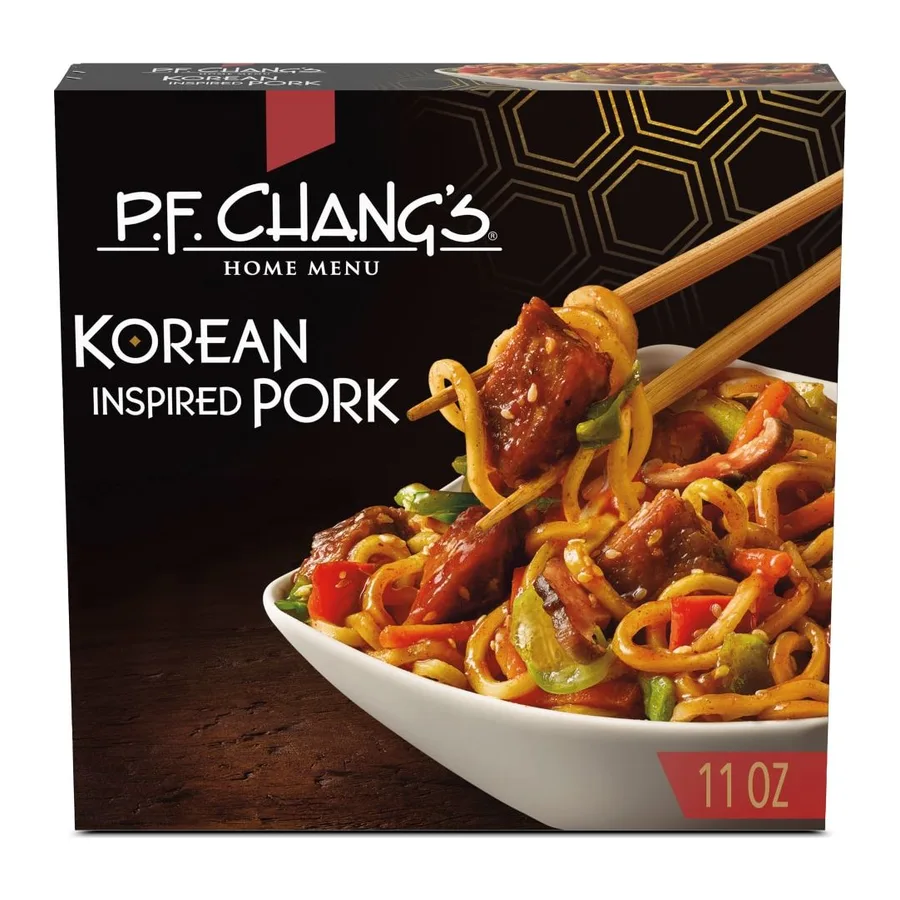
P.F. Chang's
Home Menu Korean Inspired Pork
Is P.F. Chang's Home Menu Korean Inspired Pork OK for gout?
Best avoided.
Rated down for its purine.
- Purine a serving, weighted
- up to 285 mg
- Fructose
- 7 g
- Total sugar
- 14 g
25 of 39 on the frozen dinners and entrees shelf rate a higher grade
Why E?
Best avoided. It rates E (Avoid), held there by its purine.
GoutMarket grade · 25 of 39 on the frozen dinners and entrees shelf rate a higher grade · Updated Nov 15, 2026. Every reason and source · The numbers
Purine and sugar, by the numbers
| Serving | 1 Bowl (312 g) |
|---|---|
| Purine per serving | about 134 mg, at most 285 mg (71% of the 400 mg daily guide) |
| Purine per 100 g | at most 91 mg after GoutSafe's weighting, 105 mg before |
| Purine before GoutSafe's weighting | at most 328 mg per serving |
| Main purine source | dried yeast · Measured · USDA |
| Fructose per serving | 7 g |
| Added sugar per serving | not on the label |
| Total sugar per serving | 14 g |
Where the purine comes from
| Ingredient | Matched GoutSafe food | Purine in that food, per 100 g | Share of the product | Purine at that share, per serving | Counted in the worst case |
|---|---|---|---|---|---|
| gochujang hot pepper paste ), salt},, onion powder, garlic powder, yeast extract, rice vinegar, sesame oil, paprika, corn starch] | dried yeast (D) · Measured · USDA | 847 mg | up to 5% | 132 mg | 132 mg |
| seasoned cooked pork and binder product | pork roast & chops (C) · Measured · USDA | 120 mg | up to 33% | 125 mg | 125 mg |
| soy sauce | soy sauce (shoyu) (A) · Measured · USDA | 50 mg | up to 10% | 16 mg | 9 mg |
| toasted sesame seeds | tahini (A) · Measured · USDA | 37 mg | up to 20% | 23 mg | 7 mg |
| cooked lo mein noodles | bread flour (A) · Measured · USDA | 26 mg | up to 100% | 80 mg | 5 mg |
| shiitake mushrooms | mushrooms (A) · Measured · USDA | 47 mg | up to 6.3% | 9 mg | 5 mg |
| scallions | japanese leek (negi) (A) · Measured · USDA | 41 mg | up to 5% | 6 mg | 2 mg |
| garlic puree | garlic (A) · Measured · USDA | 17 mg | up to 7.1% | 4 mg | under 1 mg |
| roasted red pepper puree | red and green bell peppers (A) · Measured · USDA | 1 mg | up to 5.6% | under 1 mg | under 1 mg |
| ginger puree | ginger root (A) · Measured · USDA | 2 mg | up to 5% | under 1 mg | under 1 mg |
| carrots | carrots (A) · Measured · USDA | 2 mg | up to 25% | 2 mg | under 1 mg |
| green cabbage | cabbage (A) · Measured · USDA | 3 mg | up to 13% | 1 mg | under 1 mg |
| red bell peppers | red and green bell peppers (A) · Measured · USDA | 1 mg | up to 8.3% | under 1 mg | under 1 mg |
Purine values come from each matched food's page on GoutSafe. Shares come from label order: US labels list ingredients by weight, so the second ingredient is at most half the product, and anything after "2% or less" is at most 2%. Plain yeast and hops, and anything the label marks as color or to keep it fresh, count at no more than 2% and yeast extract at no more than 5% wherever they sit, since recipes use them in small amounts. The worst case fills the most purine-dense ingredients to their full share first, until the shares reach the whole product, then applies GoutSafe's weighting by source, which counts plant purines at 0.3, dairy at 0 and organ meat at 1.3. Those weights are GoutSafe's model, set from a 12-year cohort of 47,150 men in which meat and seafood raised gout risk, purine-rich vegetables did not, and dairy lowered it (Choi 2004). The study gives risks by food group, not these factors. The grade uses that worst case. How we rate.
Why it's rated E
- About 134 mg of purine per serving, and at most 285 mg (71% of the 400 mg daily guide), mostly from dried yeast. Source on GoutSafe.
- The panel lists 14 g of total sugars per serving and no added-sugar line.
- Yeast extract is one of the most purine-dense ingredients there is, at 847 mg per 100 g dried. Source on GoutSafe.
Estimated from the ingredient label. Labels list ingredients by weight but rarely give amounts, so we grade on the most purine the label allows, which can read stricter than the real recipe and never safer. Sugar comes from the Nutrition Facts panel. How we rate.
What's on the label
Ingredients: Cooked Lo Mein Noodles (Enriched Wheat Flour [Wheat Flour, Malted Barley Flour, Niacin, Reduced Iron, Thiamine Mononitrate, Riboflavin, Folic Acid], Water, Soybean Oil, Vital Wheat Gluten, Xanthan Gum), Sauce (Rice Vinegar, Water,Gochujang Hot Pepper Paste [Water, Sugar, Red Chili Pepper Powder, Fermented Soybean Paste {Water, Soybeans, Rice, Salt, Alcohol}, Pear Puree Concentrate, Salt, Salted Sake {Sake (Water, Rice, Koji [Aspergillus Oryzae]), Salt}, Less Than 2% of: Onion Powder, Garlic Powder, Yeast Extract, Rice Vinegar, Sesame Oil, Paprika, Corn Starch], Brown Sugar, Soy Sauce [Water, Wheat, Soybeans, Salt, Ethyl Alcohol*], Sesame Oil, Garlic Puree, Canola Oil, Roasted Red Pepper Puree [Red Bell Pepper, Sugar, Salt], Ginger Puree, Corn Starch, Less Than 2% Of: Sugar, Lime Juice Concentrate, Spice, Lime Oil), Seasoned Cooked Pork and Binder Product (Pork, Water, Less Than 2% Of: Brown Sugar, Sea Salt, Onion, Isolated Soy Protein, Garlic, Black Pepper, Rosemary, Rosemary Extract, Olive Oil, Celery Seed Oil, Black Pepper Extract), Vegetables (Carrots, Green Cabbage, Red Bell Peppers, Shiitake Mushrooms, Scallions), Toasted Sesame Seeds. CONTAINS: SESAME, SOY, WHEAT.
Serving: 1 Bowl (312 g). Label from USDA FoodData Central (record 2778106), dated 2026-09-24. UPC 031000670733.
Where to buy
We don't link a store for a product rated E (Avoid). Nothing on this shelf rates higher.