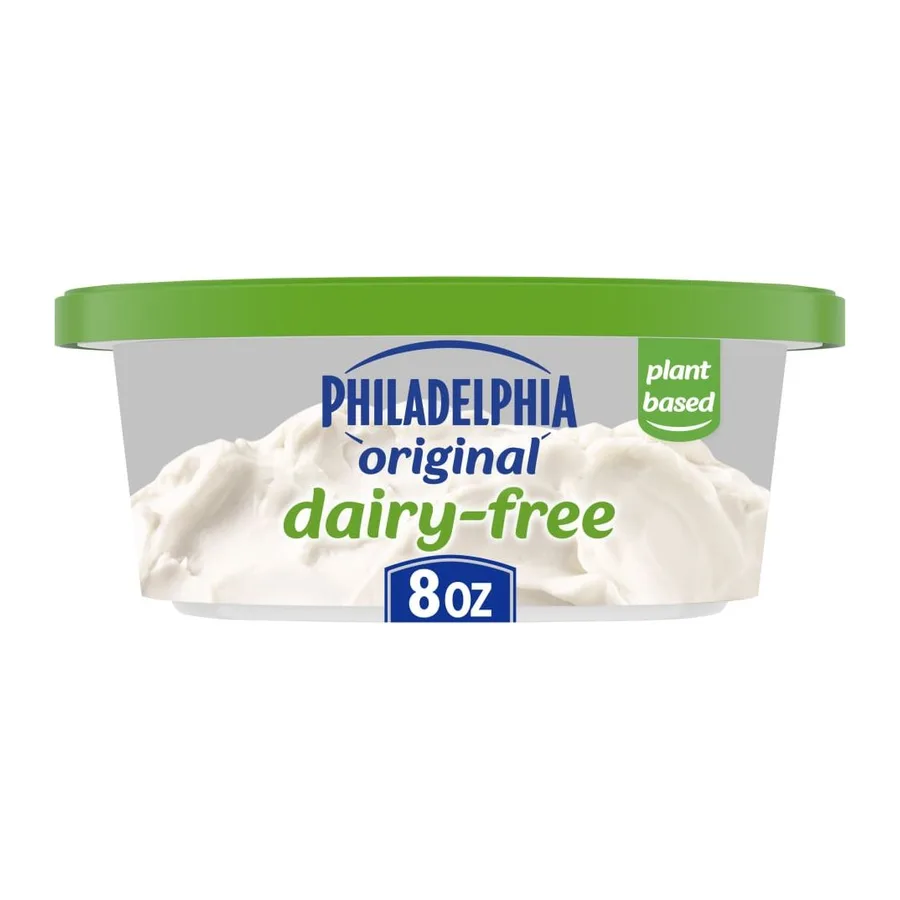
Non-dairy Spread
Is Philadelphia Non-dairy Spread OK for gout?
In moderation.
Rated down for ultra-processing.
- Purine a serving
- under 1 mg
- Fructose
- 0 g
- Added sugar
- 0 g
7 of 22 on the cream cheese shelf rate a higher grade
Why C?
In moderation. It rates C (Moderate), held there by ultra-processing. Its purine is low, under 1 mg a serving, so processing, not purine, sets the grade.
- Ultra-processedGoutSafe ↗
- Purine: very lowGoutSafe ↗
- Added sugar: under 0.5 g
GoutMarket grade · 7 of 22 on the cream cheese shelf rate a higher grade · Updated Nov 15, 2026. Every reason and source · The numbers
Purine and sugar, by the numbers
| Serving | 2 Tbsp (28 g) |
|---|---|
| Purine per serving | under 1 mg (under 1% of the 400 mg daily guide) |
| Purine per 100 g | under 1 mg |
| Purine before GoutSafe's weighting | under 1 mg per serving |
| Main purine source | fava bean protein isolate (counted as canned pinto beans) · Measured · USDA |
| Fructose per serving | 0 g |
| Added sugar per serving | 0 g |
| Total sugar per serving | 0 g |
Where the purine comes from
| Ingredient | Matched GoutSafe food | Purine in that food, per 100 g | Share of the product | Purine at that share, per serving | Counted in the worst case |
|---|---|---|---|---|---|
| fava bean protein isolate | canned pinto beans (A) · Measured · USDA | 25 mg | up to 2% | under 1 mg | under 1 mg |
Purine values come from each matched food's page on GoutSafe. Shares come from label order: US labels list ingredients by weight, so the second ingredient is at most half the product, and anything after "2% or less" is at most 2%. Plain yeast and hops, and anything the label marks as color or to keep it fresh, count at no more than 2% and yeast extract at no more than 5% wherever they sit, since recipes use them in small amounts. The worst case fills the most purine-dense ingredients to their full share first, until the shares reach the whole product, then applies GoutSafe's weighting by source, which counts plant purines at 0.3, dairy at 0 and organ meat at 1.3. Those weights are GoutSafe's model, set from a 12-year cohort of 47,150 men in which meat and seafood raised gout risk, purine-rich vegetables did not, and dairy lowered it (Choi 2004). The study gives risks by food group, not these factors. The grade uses that worst case. How we rate.
Why it's rated C
- Open Food Facts classes it as ultra-processed (NOVA 4), and GoutSafe's rule keeps ultra-processed foods at Moderate (C) or below. Its label lists modified potato starch, the kind of additive that class counts. Source on GoutSafe.
- Under 1 mg of purine per serving, well under 1% of the 400 mg daily guide. Source on GoutSafe.
- The Nutrition Facts panel lists 0 g of added sugar per serving, which US labels print for anything under 0.5 g, and the ingredients list a sweetener.
Estimated from the ingredient label. Labels list ingredients by weight but rarely give amounts, so we grade on the most purine the label allows, which can read stricter than the real recipe and never safer. Sugar comes from the Nutrition Facts panel. How we rate.
What's on the label
Ingredients: WATER, COCONUT OIL, MODIFIED POTATO STARCH, CONTAINS LESS THAN 2% OF MALTODEXTRIN, FAVA BEAN PROTEIN ISOLATE, SALT, GUAR GUM, SUGAR, LACTIC ACID, SORBIC ACID AS A PRESERVATIVE, NATURAL FLAVOR, CITRIC ACID.
Serving: 2 Tbsp (28 g). Added sugar: 0 g per serving. Label from USDA FoodData Central (record 2775075), dated 2026-08-20. UPC 021000081431.
Where to buy
Prices change often, so we don't show them. The rating is the same whichever store you pick.