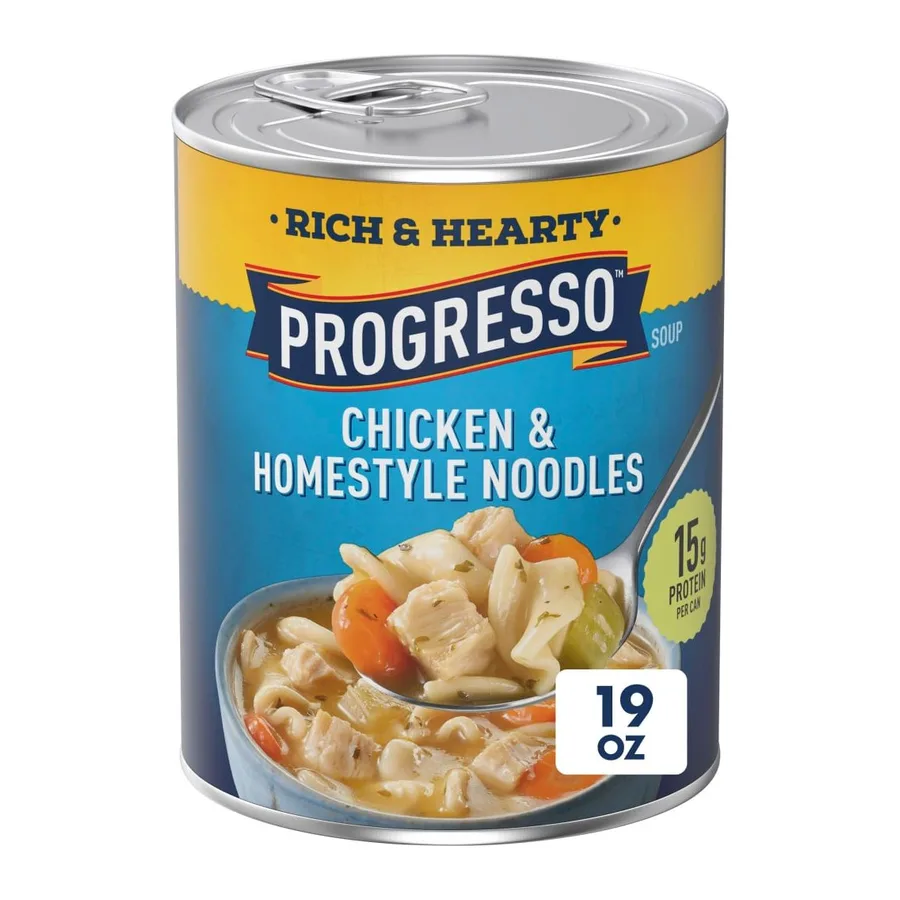
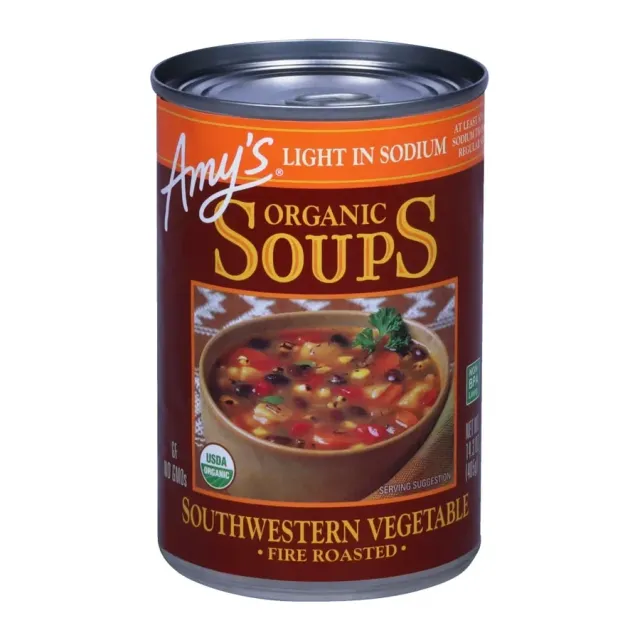
Amy's
Southwestern Vegetable Soup
Purine: up to 15 mg
Best avoided.
Rated down for its purine.
A better-rated swapSee all 24 that rate higher
AGood Amy's Southwestern Vegetable SoupPaid links, they support the site.
Best avoided. It rates E (Avoid), held there by its purine.
GoutMarket grade · 24 of 29 on the canned soup shelf rate a higher grade · Updated Nov 15, 2026. Every reason and source · The numbers
Same shelf, a better grade. Ranked by gout rating only.
Amy's
Purine: up to 15 mg
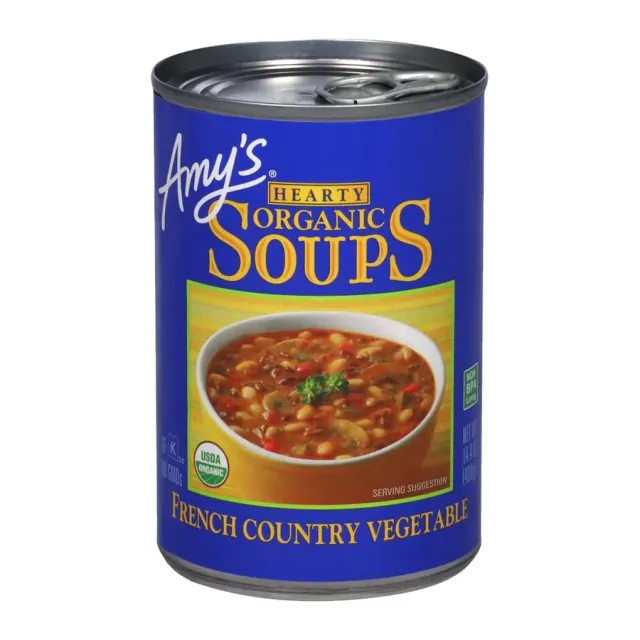
Amy's
Purine: up to 20 mg
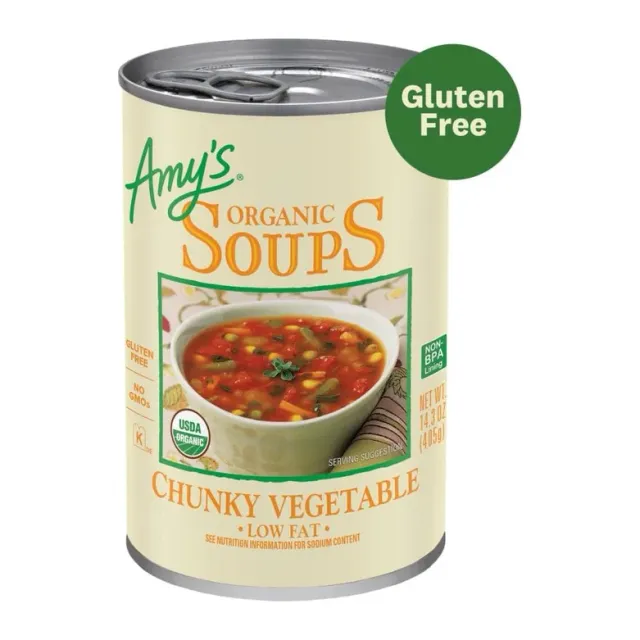
Amy's
No added sugar
| Serving | 1 can (538 g) |
|---|---|
| Purine per serving | about 244 mg, at most 556 mg (139% of the 400 mg daily guide) |
| Purine per 100 g | at most 103 mg after GoutSafe's weighting, 106 mg before |
| Purine before GoutSafe's weighting | at most 570 mg per serving |
| Main purine source | cooked chicken breast · Measured · published study |
| Fructose per serving | 1.5 g |
| Added sugar per serving | 1.1 g |
| Total sugar per serving | 3 g |
| Ingredient | Matched GoutSafe food | Purine in that food, per 100 g | Share of the product | Purine at that share, per serving | Counted in the worst case |
|---|---|---|---|---|---|
| cooked white chicken meat | cooked chicken breast (C) · Measured · published study | 175 mg | up to 50% | 472 mg | 472 mg |
| chicken broth | chicken bone broth (B) · Estimated | 30 mg | up to 100% | 161 mg | 77 mg |
| soy protein isolate | soy protein concentrate (C) · Measured · USDA | 192 mg | up to 2% | 21 mg | 6 mg |
| carrots | carrots (A) · Measured · USDA | 2 mg | up to 33% | 4 mg | under 1 mg |
| egg noodle | bread flour (A) · Measured · USDA | 26 mg | up to 25% | 35 mg | under 1 mg |
| celery | celery (A) · Estimated | 13 mg | up to 20% | 14 mg | under 1 mg |
| carrot puree | carrots (A) · Measured · USDA | 2 mg | up to 2% | under 1 mg | under 1 mg |
| tomato extract | tomatoes (A) · Measured · USDA | 7 mg | up to 2% | under 1 mg | under 1 mg |
Purine values come from each matched food's page on GoutSafe. Shares come from label order: US labels list ingredients by weight, so the second ingredient is at most half the product, and anything after "2% or less" is at most 2%. Plain yeast and hops, and anything the label marks as color or to keep it fresh, count at no more than 2% and yeast extract at no more than 5% wherever they sit, since recipes use them in small amounts. The worst case fills the most purine-dense ingredients to their full share first, until the shares reach the whole product, then applies GoutSafe's weighting by source, which counts plant purines at 0.3, dairy at 0 and organ meat at 1.3. Those weights are GoutSafe's model, set from a 12-year cohort of 47,150 men in which meat and seafood raised gout risk, purine-rich vegetables did not, and dairy lowered it (Choi 2004). The study gives risks by food group, not these factors. The grade uses that worst case. How we rate.
Estimated from the ingredient label. Labels list ingredients by weight but rarely give amounts, so we grade on the most purine the label allows, which can read stricter than the real recipe and never safer. Sugar comes from the Nutrition Facts panel. How we rate.
Ingredients: Chicken Broth, Cooked White Chicken Meat, Carrots, Egg Noodle (semolina wheat, egg*, egg white*), Celery. Contains less than 2% of: Modified Food Starch, Water, Salt, Chicken Fat, Corn Starch, Flavoring, Carrot Puree, Potassium Chloride, Sugar, Onion Powder, Soy Protein Isolate, Sodium Phosphate, Tomato Extract, Spice, Garlic Powder, Parsley*, Maltodextrin, Chives*, Beta Carotene (color). *Dried
Serving: 1 can (538 g). Added sugar: 1.1 g per serving. Label from USDA FoodData Central (record 2752254), dated 2026-01-22. UPC 041196914016.
We don't link a store for a product rated E (Avoid). The better-rated swaps above carry the buy buttons.